 Demon VS Robot DVSR Marketing Website
 Experienced content marketers evaluate new platforms with a different set of questions than beginners ask. You are not asking whether the platform can generate a blog post from a prompt. You are asking whether the template architecture actually reduces the workflow friction that limits your current content volume, whether the multi-model claims represent genuine capability differentiation or marketing positioning, whether the SEO features integrate meaningfully with the strategic content work that drives organic performance, and whether the platform's long-term sustainability merits building serious workflow dependency on it.
If you are evaluating AI Content Center as a potential component of a professional content marketing operation, surface-level feature descriptions are insufficient for that decision. This deep dive covers the full operational and strategic picture: the mechanics behind each core capability, the practical implications for content programs operating at professional standards, the honest performance boundaries that matter for strategic deployment decisions, and the specific conditions under which AI Content Center delivers genuine production value versus where its constraints become the binding factor in your content strategy.
What Is AI Content Center?
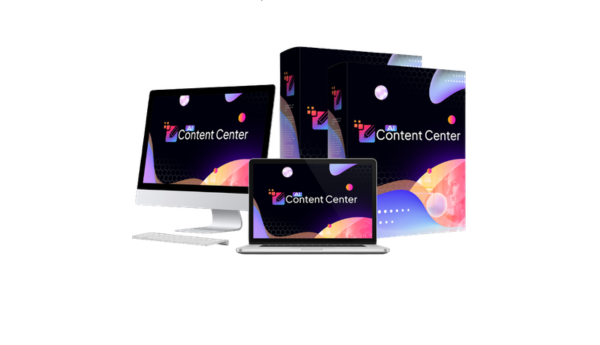
AI Content Center is a template-based, multi-model AI content creation platform that generates marketing content across multiple formats from one centralized dashboard through structured brief input workflows rather than open-ended AI prompt construction. Before the feature analysis begins, a naming clarification that prevents research confusion: the phrase “AI content center” appears in two distinct contexts in 2026, referring both to a general concept describing any centralized AI-powered content management system and to this specific software product. This review covers the software product. The conceptual AI content center describes a broader six-layer system encompassing creation, management, optimization, collaboration, knowledge storage, and distribution infrastructure that the product partially addresses rather than fully implements.
The platform's core architecture integrates template-driven content generation across blog posts, product reviews, email sequences, social media captions, video scripts, local business content, and sales copy with SEO-oriented on-page features, content repurposing workflows, and supporting creative asset generation depending on plan tier. For experienced content marketers evaluating it as a professional production infrastructure component, understanding precisely what each feature delivers and where each one's practical ceiling sits is more operationally useful than the marketing summary of what they collectively promise.
The strategic positioning that matters most for experienced evaluators is the distinction between AI Content Center as a draft acceleration tool and AI Content Center as a content quality system. The platform accelerates the structural scaffolding phase of content production for standard marketing formats by compressing the time from brief to organized first draft. It does not improve the content quality ceiling above what the editorial investment applied to those drafts produces. Every strategic and editorial decision that determines whether content achieves its performance objectives remains a human responsibility that the platform supports rather than performs.
How AI Content Center Works: A Step-by-Step Walkthrough
Step 1: Template Selection and Brief Completion
Template selection from the organized library is followed by detailed brief completion covering topic specificity, keyword context, audience precision, tone guidance with examples rather than generic labels, and content goal clarity beyond format type. Brief quality is the highest-leverage variable within the user's control for output quality.
Step 2: Outline Review and Draft Generation
The structural outline generated before full drafting provides a review checkpoint for structural alignment with brief intent. Reviewing and adjusting the outline before committing to full draft generation reduces the frequency of complete redrafts caused by structural misinterpretation of ambiguous briefs.
Step 3: Factual Verification and Editorial Refinement
Every specific claim, statistic, and data point in generated drafts requires verification against primary sources before subsequent use. Generic AI phrasing is systematically identified and replaced with specific, brand-distinctive language. Original perspective, expertise, and audience-specific insight are added to differentiate content from generic coverage of the same topic.
Step 4: Export and Publishing Workflow Integration
Finalized content is exported in required formats for CMS publication, email platform deployment, or social media scheduling. Direct integration availability varies by plan tier and requires verification against specific workflow requirements before commitment.
Key Features of AI Content Center

Multi-Format Content Generation Architecture
The template library architecture is the most strategically important structural decision in AI Content Center's design because it determines both the platform's accessibility advantage over direct LLM access and its flexibility ceiling relative to purpose-built specialized tools. Template-structured generation through brief input fields reduces the prompt engineering requirement to a guided brief-filling process, which lowers the access barrier for non-technical content producers while simultaneously constraining the output customization depth available to experienced practitioners who would extract more value from direct model interaction with sophisticated custom prompts.
For experienced content marketers evaluating this architecture honestly, the operational implication is that AI Content Center produces the most consistent value for the standard marketing content formats where template structures genuinely reflect established best practices: blog post SEO structures, email sequence architectures, and social media format conventions are well-established enough that template-based generation reliably produces appropriate starting structures. It produces diminishing value for content formats requiring distinctive structural approaches, complex argument development, or highly specific brand positioning where template conventions constrain rather than guide the generation toward optimal output.
The outline generation that precedes full draft production creates a strategic workflow intervention point that experienced content practitioners should use rather than bypass. Reviewing the generated outline against the specific content goal, target audience intent, and competitive differentiation requirements before committing to a full draft allows structural adjustments that improve final output quality more efficiently than structural corrections applied to a completed draft. Experienced content strategists who treat the outline as a collaborative brief negotiation with the AI rather than an automatic pre-draft step consistently produce better final drafts than those who accept the first structural interpretation without review.
Content Repurposing and Multi-Channel Adaptation
The content repurposing workflow's operational mechanics involve accepting source content text and generating platform-adapted shorter format versions through template-guided adaptation. The strategic value for experienced content marketers operating multi-channel distribution programs is the reduction of per-platform manual adaptation sessions, with LinkedIn, Instagram, Facebook, Twitter, and email newsletter versions generated from one source brief rather than written independently for each distribution channel.
The quality assessment framework that experienced content marketers should apply to repurposed outputs involves two distinct dimensions. The first is platform-appropriate formatting: does the adapted version use the correct length, tone register, and structural conventions for each platform's content norms? The second, and more strategically significant, is insight preservation: does the adapted version retain the source content's specific data points, original observations, or distinctive analytical perspective, or does it produce a generic summary that strips the content's actual value and produces platform-appropriate filler that serves a publishing schedule without serving the audience? Repurposed content that passes the formatting test but fails the insight preservation test performs poorly on engagement metrics regardless of how efficiently it was produced.
Email sequence repurposing from completed articles or product content deserves specific attention for experienced email marketers. The sequence structure generated from a content brief produces a useful narrative arc framework covering the awareness through decision progression that effective sequences follow. The persuasion depth, audience segmentation logic, and brand-specific proof elements that produce email campaigns with strong conversion outcomes require human rewriting that the template framework initiates but cannot complete. Experienced email marketers who approach generated sequences as detailed structural briefs for human persuasion writers get more useful output from this feature than those who treat generated sequences as finished campaign drafts requiring only copy refinement.
SEO Content Feature Set
The SEO-oriented features cover the on-page content elements that search-optimized content requires: meta description generation for target pages, title tag variations testing different keyword placement and search intent framing, FAQ section creation from keyword cluster inputs, and content structure guidance following search-optimized heading hierarchies. For experienced content marketers who currently manage these elements through separate SEO tool sessions alongside content generation, the integration within one workflow reduces context-switching overhead and per-piece configuration time at scale.
The precise technical scope definition that prevents strategic misapplication of these features in professional content programs is the distinction between on-page content creation and comprehensive SEO infrastructure. AI Content Center's SEO features handle content creation elements with genuine competence: keyword-informed drafting, meta element generation, and FAQ content for featured snippet targeting are all within the feature set's practical capability. They do not replace technical SEO auditing covering site architecture, Core Web Vitals, crawlability, and indexation issues, strategic topical authority mapping that determines content investment priorities across a site's full topic landscape, competitive gap analysis that identifies specific ranking opportunities, or internal linking architecture that distributes page authority strategically across a site's content ecosystem.
Experienced SEOs who evaluate AI Content Center's SEO features against these distinctions consistently identify them as appropriate tools for the content creation layer of an SEO program that requires additional technical and strategic infrastructure for competitive organic performance. Experienced SEOs who expect the SEO features to substitute for that additional infrastructure will find content performance disappointing regardless of generation quality.
Social Media Content Generation Mechanics
The platform-specific social content generation mechanics involve tone calibration between platforms based on each platform's established content conventions: concise hook-forward framing for Twitter and X, professional context and slightly longer format for LinkedIn, visual description orientation and hashtag integration for Instagram, and dual-format support for Facebook posts across link preview and standalone content types. The automated calibration produces technically platform-appropriate content structures from one brief input, which is operationally useful for content programs distributing across multiple platforms simultaneously.
The strategic quality dimension that automated tone calibration does not address is brand voice specificity within each platform's tone norms. A brand's LinkedIn presence should not sound like generic professional LinkedIn content. It should sound like that specific brand expressing itself through LinkedIn's professional format conventions. The gap between platform-appropriate generic tone and brand-specific platform voice is where the editorial investment that experienced social media content managers apply to AI-generated social copy creates the quality differentiation that drives engagement performance. Automated tone calibration gets content into the right structural format for each platform. Brand voice specificity in that format requires human editorial judgment that the platform supports rather than replaces.
AI Image Generation and Creative Asset Integration
Creative asset generation for blog featured images, social media graphics, and content illustrations reduces separate image generation tool dependencies for content programs whose visual asset requirements are covered by AI-generated imagery. The integration value is most significant for content operations that currently maintain separate image generation subscriptions alongside content writing tools, where consolidation reduces both cost and workflow fragmentation.
The appropriate strategic application of AI-generated images within a professional content program distinguishes between supporting and decorative visuals where functional quality serves the purpose adequately and brand identity creative where distinctive visual quality directly communicates brand positioning to audiences who encounter it. Blog post supporting illustrations, social media content graphics, and email newsletter visual elements are use cases where AI-generated imagery performs adequately for most professional content programs. Brand photography, hero creative for advertising campaigns, and visual identity elements where distinctive design quality affects brand perception are use cases where professional creative resources remain appropriate regardless of AI image generation capability.
Email Sequence Generation Mechanics
The email sequence template architecture covers the sequence types that digital marketing programs regularly require, with structural scaffolding for launch sequences spanning awareness through final urgency, lead nurture flows from initial opt-in through considered purchase, post-purchase onboarding series, re-engagement campaigns for inactive subscribers, and promotional sequences for limited-time campaigns. The structural value is most significant during the planning phase when sequence architecture decisions determine whether a campaign's narrative arc is coherent and strategically sound before significant copy investment is made.
Experienced email marketers evaluating this feature should focus their quality assessment on the two dimensions that most affect campaign performance outcomes. The first is structural coherence: does the generated sequence follow a logical narrative arc that moves subscribers through the intended consideration journey with appropriate progression between stages? This is where template generation consistently delivers value. The second is persuasion quality: do the specific copy elements within each email stage deploy the social proof, objection handling, benefit framing, and urgency creation that drive conversion outcomes in the specific audience context? This is where template generation produces adequate scaffolding that skilled email copywriters substantially improve through rewriting rather than editing.
Project Organization and Content Management
The centralized dashboard with folder and tag organization provides the basic content asset management that keeps AI-generated content accessible within a structured project hierarchy rather than distributed across chat histories, document files, and separate tool accounts. For experienced content marketers managing multiple simultaneous content streams, the organizational value of central content storage is genuine even when the management sophistication is basic relative to purpose-built content management platforms.
Version history availability is the content management feature distinction most operationally significant for experienced content producers who iterate through multiple draft versions of complex content pieces. Platforms that retain previous draft versions enable the comparison and reversion workflows that content revision processes regularly require. Platforms operating on an overwrite model create workflow friction when earlier draft versions need to be recovered or compared against current revisions. Verifying current version management behavior before committing workflow dependency to the platform is appropriate technical due diligence for any professional content operation.
Pricing Plans and OTOs detailed
Front-End – AI Content Center ($14.93 one-time)
- One-time payment with lifetime access
- Multi-model AI content creation platform
- Includes long-form content generation tools
- Access to premium AI models and SEO tools
- Commercial rights included
- Future updates included
- Built for bloggers, marketers, freelancers, agencies, and creators
- No recurring monthly fees
- 30-day money-back guarantee
OTO 1 – AI Content Center Unlimited Edition ($47 – $67 one-time)
- Removes all platform limitations
- Unlimited content generations
- Unlimited eBooks and long-form projects
- Access to Claude, GPT, Gemini, DeepSeek, and Grok models
- Faster processing speeds
- Advanced SEO features included
- Commercial rights included
- Designed for agencies, bloggers, affiliate marketers, and content creators
OTO 2 – AI Content Center DFY Suite Edition ($47 – $67 one-time)
- Done-for-you content template system
- Templates for blogs, sales pages, ads, funnels, and SEO articles
- AI Article Wizard and Smart Editor included
- AI Rewriter and SEO Engine included
- Plug-and-play workflow for faster content creation
- Commercial-use rights included
- Built for marketers, freelancers, agencies, and business owners
OTO 3 – AI Content Center Creative Studio Edition ($37 – $47 one-time)
- All-in-one AI creative production suite
- Generate AI voiceovers and marketing images
- Analyze PDFs and documents
- Create multi-format content from one dashboard
- Commercial rights included
- Ideal for YouTubers, course creators, marketers, and agencies
OTO 4 – AI Content Center Agent Mode ($47 – $67 one-time)
- Autonomous AI execution system
- Automates content, SEO, marketing, and workflows
- Runs multi-step tasks automatically
- Hands-free business automation
- Commercial rights included
- Built for marketers, freelancers, entrepreneurs, and agencies
OTO 5 – AI Content Center Financial Freedom System ($27 – $37 one-time)
- AI monetization and business training system
- Includes client acquisition strategies
- Done-for-you offer templates and pricing systems
- Learn to build recurring AI income streams
- Commercial rights included
- Designed for freelancers, agencies, and marketers
OTO 6 – AI Content Center Enterprise Edition ($47 – $67 one-time)
- Unlocks full platform performance and scalability
- Premium intelligence mode included
- Advanced optimization and faster processing
- Priority access to future features and updates
- Built for high-volume content production and client work
- Ideal for serious marketers, agencies, and businesses
OTO 7 – AI Content Center AutoFlow Engine ($37 – $47 one-time)
- Hands-free workflow automation system
- Automatically generates and processes content
- Smart triggers and batch processing included
- Runs workflows continuously in the background
- Built for scaling productivity and automation
- Ideal for marketers, agencies, and business owners
OTO 8 – AI Content Center Marketing Bundle ($97 – $197 one-time)
- Create unlimited client accounts
- Sell AI content services to customers and clients
- Keep 100% of profits
- Done-for-you support included
- Build recurring income with AI services
- Perfect for agencies, freelancers, and local marketers
OTO 9 – AI Content Center WhiteLabel License ($197 – $297 one-time)
- Launch your own AI software business
- Full white-label and rebranding rights
- Custom domain, logo, and branding support
- Hosting and software setup included
- Unlimited client accounts included
- Keep 100% of profits
- Built for software entrepreneurs, agencies, and marketers
Advantages of AI Content Center
- Structural scaffolding phase compression delivers the clearest production efficiency gain. The template-driven transition from brief to organized first draft for standard marketing content formats reduces what currently takes hours of blank-page composition and structural planning to minutes of generation and outline review, which is the production phase most directly addressable by AI content tools and where time savings compound most significantly across high-volume content calendars.
- Multi-format coverage within one platform reduces tool fragmentation overhead. Having blog posts, social content, email sequences, and supporting asset generation in one workflow rather than coordinating separate specialized tools for each content type reduces the context-switching, subscription management, and workflow coordination overhead that multi-tool content production creates at scale.
- Template structure provides accessible on-ramp for content team members without specialist backgrounds. Account managers, subject matter experts, and business owners contributing to content production without deep copywriting backgrounds get structured starting points that produce usable first drafts without requiring prompt engineering skill development, which expands the team members who can participate productively in content production.
- Pre-draft outline review creates a strategic checkpoint that improves final draft quality. The outline generation step before full drafting allows structural alignment review that catches misinterpretations of content briefs before the full drafting investment is made, reducing the frequency of complete structural redrafts that misaligned brief interpretation produces.
- Cost accessibility provides a meaningful evaluation entry point without subscription commitment. One-time or low-cost access to multi-format content generation capability allows genuine workflow evaluation before committing to recurring subscription costs, which is valuable for experienced marketers who want to assess AI-assisted production's operational fit before restructuring established content workflows around a new platform.
Disadvantages of AI Content Center
- Generic AI phrasing is a systematic output characteristic requiring disciplined editorial identification and replacement. Formulaic marketing language including “elevate your experience,” “transform your results,” and “unlock your potential” appears consistently across AI-generated marketing content from AI Content Center and all comparable platforms. Experienced content marketers who build systematic generic phrase identification into editorial review workflows address this effectively. Those who treat it as an occasional correction rather than a consistent output characteristic consistently allow generic AI tone into published content.
- Template constraints limit output customization for content requiring distinctive structural approaches. Content formats requiring unconventional structures, complex argument architectures, or highly specific organizational approaches that do not conform to established marketing content templates produce less useful AI Content Center outputs than standard formats, because the template system that makes generation accessible for standard formats becomes a constraint for content requiring structural distinctiveness.
- Platform maturity and long-term sustainability require active evaluation rather than assumed continuity. The one-time pricing model for an AI-heavy platform with significant ongoing infrastructure costs through LLM API usage raises legitimate operational sustainability questions that experienced content marketers building serious workflow dependencies should investigate through vendor track record assessment rather than dismissing or accepting without evidence.
- SEO feature scope does not extend to the strategic and technical SEO infrastructure that competitive organic performance requires. On-page content creation support and comprehensive SEO strategy are distinct capability categories that AI Content Center serves well and does not serve respectively. Content programs with serious organic search objectives need additional strategic and technical SEO infrastructure that operates alongside rather than within the platform.
- Collaboration and workflow management depth is insufficient for complex team editorial operations. Tracked approval workflows, multi-level access controls with audit trails, sophisticated version management, and the editorial coordination infrastructure that professional content teams require at scale are not current platform strengths that experienced content operations should assume are covered without specific verification.
Who Is AI Content Center For?
- Experienced content marketers evaluating AI production integration who want a cost-accessible, low-commitment entry point for assessing AI-assisted content workflow integration before restructuring established workflows around a higher-investment platform get genuine evaluation value from AI Content Center's accessible pricing and multi-format coverage.
- Content strategists managing volume standard-format content programs for clients or brands where structural scaffolding acceleration across blog posts, social content, and email sequences is the primary production bottleneck benefit from the template-driven efficiency that reduces per-piece drafting time for the high-frequency standard formats that constitute the majority of routine content calendars.
- Small content operations building initial AI workflow infrastructure who need a practical, affordable starting point for AI-assisted content production before their operational scale justifies investment in more sophisticated specialized platforms find AI Content Center's multi-format coverage and template accessibility a practical initial infrastructure component.
- Content producers supplementing existing specialized tools who want to add specific content format capabilities, particularly email sequence generation or multi-platform social adaptation, without adding separate subscription costs for each function find AI Content Center's consolidated coverage a cost-effective supplement to more specialized primary tools.
Who Is AI Content Center Not For?
- Enterprise content operations with compliance, security, and governance requirements need established platforms with documented compliance certifications, enterprise security architecture, and contractual data handling guarantees that newer platforms with less transparent operational infrastructure do not currently provide.
- Content programs with advanced SEO workflow integration requirements including topical authority mapping, content audit infrastructure, competitive gap analysis, and internal linking management that must be integrated with content generation workflows need purpose-built SEO content platforms rather than general-purpose content generation tools with basic SEO feature additions.
- Professional editorial operations requiring sophisticated team collaboration with tracked approval routing, multi-level access controls, comprehensive version management, and the editorial workflow infrastructure that professional publishing standards require need collaboration-first platforms rather than generation-first platforms with basic organizational features.
AI Content Center vs. The Alternatives
Capability | AI Content Center | Jasper | ChatGPT Plus | Notion AI | Surfer SEO + AI |
Pricing Model | One-time / low cost | Per-seat subscription | Subscription | Subscription add-on | Subscription bundle |
Template Architecture | Pre-structured, marketing focused | Pre-structured, marketing focused | Open-ended, flexible | Document-centric | SEO-workflow integrated |
Model Transparency | Requires verification | Specified | Fully transparent | GPT-based | Specified |
SEO Integration Depth | Basic on-page | Moderate | None | None | Advanced |
Content Repurposing | Yes | Yes | Manual workflow | Limited | Limited |
Team Collaboration | Basic | Yes (higher tiers) | None | Strong | Moderate |
Platform Maturity | Newer | Established | Established | Established | Established |
Image Generation | Plan-dependent | Add-on | Add-on | No | No |
Version Management | Verify before commit | Yes | None built-in | Yes (Notion) | Moderate |
Long-term Reliability | Uncertain | Demonstrated | Demonstrated | Demonstrated | Demonstrated |
Against Jasper for growing content teams, AI Content Center wins on initial cost accessibility at comparable template coverage while losing on platform maturity, collaboration features, and the demonstrated multi-year operational track record that client-critical content workflow infrastructure requires. The migration from AI Content Center to Jasper as operational scale and reliability requirements increase is a more natural upgrade path than the reverse.
Against ChatGPT Plus for experienced practitioners who understand prompting, AI Content Center wins on template-structured accessibility for non-technical team members and multi-format coverage without custom prompt construction, while losing on model transparency, output flexibility, and the direct model access that sophisticated custom prompt workflows produce. For technical users who build purpose-specific content workflows from direct model interaction, ChatGPT Plus delivers more sophisticated output customization than any pre-packaged template platform.
Against Surfer SEO combined with an AI writing tool for serious organic search programs, AI Content Center wins on cost consolidation for multi-format non-SEO content while losing decisively on the technical SEO workflow integration, content audit capabilities, and competitive analysis infrastructure that competitive organic search performance requires. Content programs where organic search is the primary distribution channel need Surfer-level SEO workflow integration that AI Content Center's basic on-page features do not approach.
Frequently Asked Questions About AI Content Center
- How does the template architecture's structural approach compare to direct LLM prompting for experienced practitioners?
Template-structured generation produces more consistently formatted first drafts for standard marketing content formats with less prompt engineering investment than direct LLM prompting requires for equivalent structural consistency. Direct LLM access with sophisticated custom prompts produces more flexible, more precisely customized outputs for content requiring distinctive approaches, complex arguments, or highly specific brand positioning that template constraints limit. Experienced practitioners who have developed strong prompt engineering skills and content-specific prompt libraries extract more value from direct model access. Those who want template-structured consistency for standard formats with reduced prompt engineering overhead get more efficient production value from AI Content Center's architecture.
- What is the most accurate way to assess AI Content Center's actual model capabilities before purchase?
The most reliable assessment approach involves requesting specific technical documentation from the vendor regarding which AI models power the platform's generation, whether those models are accessed through direct API integration or through an intermediary layer, how the platform handles model updates as provider capabilities improve, and what the specific rate limits or usage constraints apply to model access at each plan tier. Testing the platform's outputs for the specific content types most critical to your workflow with detailed real-world briefs, and comparing those outputs against results from direct model access with equivalent prompts, provides empirical quality comparison evidence more reliable than vendor capability claims alone.
- How should experienced content marketers build brand voice specificity into AI Content Center outputs?
Brand voice specificity in AI Content Center outputs is primarily a brief input quality function rather than a post-generation editing function. Brief inputs that specify brand voice through concrete examples, documented specific phrases and communication patterns characteristic of the brand, explicit forbidden language and generic phrase categories to avoid, reference content examples representing the target voice standard, and audience-specific communication characteristics rather than generic tone labels produce drafts with more accurate brand voice calibration from generation. Post-generation editing then addresses remaining calibration gaps rather than performing the primary voice alignment work, which is more efficient than generating generic outputs and fully rewriting for brand voice afterward.
- What analytics and performance measurement practices are most useful for AI Content Center content programs?
Performance measurement for AI Content Center content programs should cross-reference content engagement metrics against production efficiency metrics to evaluate whether the platform is delivering value relative to alternative production approaches. Tracking per-piece total production time including generation, editorial review, and refinement against a pre-AI baseline establishes efficiency gain evidence. Comparing organic search performance, social media engagement rates, and email campaign metrics between AI-assisted and manually produced content of equivalent strategic quality within the same audience and distribution context establishes content performance evidence. Reviewing both dimensions together produces a complete operational value assessment that neither metric alone provides.
- How does AI Content Center's SEO feature set integrate with professional SEO workflow infrastructure?
AI Content Center's SEO features produce content creation outputs including keyword-informed drafts, meta descriptions, title variations, and FAQ content that integrate with professional SEO workflows as the content generation layer rather than as a comprehensive SEO infrastructure component. The practical integration involves using AI Content Center for content drafting and on-page element generation, dedicated SEO tools for technical audit, competitive analysis, and topical authority planning, and CMS-level or dedicated tools for internal linking architecture management. AI Content Center handles the content creation phase within this workflow. The strategic and technical SEO dimensions that determine whether that content earns rankings require the additional infrastructure layers that AI Content Center was not designed to replace.
- What is the correct editorial workflow for AI Content Center content in professional content operations?
The editorial workflow that produces consistently professional output quality from AI Content Center generation involves five sequential steps. First, outline review and adjustment before committing to full draft generation ensures structural alignment with content goals. Second, factual verification of all specific claims, statistics, and data points against primary sources before any subsequent use. Third, systematic generic phrase identification and replacement using a documented list of common AI formulations for the specific content types produced.
Fourth, brand voice alignment review that adds specific examples, distinctive perspective, and brand-specific language beyond what generation provides. Fifth, SEO meta data review for keyword alignment, search intent accuracy, and click-through optimization before publication. Building these steps as explicit checklist items rather than informal quality intentions produces consistent professional output quality across team members and content volumes.
- How should content program architects evaluate AI Content Center's fit within a larger content technology stack?
Content technology stack integration evaluation for AI Content Center involves three assessment dimensions. The first is capability complementarity: which content program functions does AI Content Center address effectively, which require specialized tools that AI Content Center does not replace, and which require human expertise that no technology substitutes for? The second is workflow integration: how do AI Content Center outputs move through the remainder of the content production workflow, what manual transfer steps are required, and where do integration gaps create friction?
The third is dependency risk: what is the business continuity impact if AI Content Center's operational quality declines or the platform changes significantly, and how does that risk compare to the operational benefits the platform provides? Answers to all three dimensions produce a more complete stack fit assessment than feature comparison alone.
- What content volume threshold makes AI Content Center operationally worthwhile for professional content programs?
The operational efficiency case for AI Content Center strengthens proportionally with content volume and format diversity. For content programs producing fewer than five pieces per month across one or two format types, the platform setup, brand voice calibration, and workflow integration investment may not produce sufficient time savings to justify the operational complexity added. For programs producing ten or more pieces per month across multiple format types, the per-piece time savings from structural scaffolding compression and multi-format coverage produce meaningful aggregate efficiency gains that compound with volume. The content volume threshold that makes the investment worthwhile varies with the specific content types produced, the editorial quality standards applied, and the alternative production costs the platform replaces.
- How does AI Content Center handle content refresh and updating existing published content?
Content refresh workflows, specifically updating existing published content with current information, expanded depth, or improved SEO alignment, benefit from AI Content Center's generation capabilities in a specific and limited way. Providing the existing content text and requesting specific types of additions or improvements produces useful supplementary material that reduces the effort of substantial content refreshes. The refresh quality ceiling is the same as the initial generation ceiling: factual accuracy verification, brand voice alignment, and strategic improvement decisions remain human responsibilities that generation accelerates rather than performs. Systematic content refresh programs that identify update priorities through performance analytics and competitive gap analysis require strategic and technical infrastructure beyond what content generation platforms provide.
- What does long-term success with AI Content Center require from experienced content marketing operations?
Long-term content program success with AI Content Center requires four sustained strategic commitments. Consistent brief quality investment as a team standard rather than an individual judgment call, producing the detailed specific inputs that generate useful first drafts rather than minimal inputs that produce generic outputs requiring extensive rewriting. Systematic editorial process discipline that applies documented quality standards to every generated piece rather than allowing quality variation based on individual reviewer attention or time pressure.
Platform dependency management that maintains exportable content in platform-independent formats and monitors platform operational quality without building workflow dependency that the platform's sustainability uncertainty does not yet justify. And content program architecture discipline that applies AI Content Center to the format categories where its template-driven efficiency delivers genuine value while maintaining appropriate human and specialized tool investment for content categories requiring the distinctive quality and strategic depth that template generation cannot produce.
[/tie_list] [/box]- SPECIAL BONUS 1 – MultiNetwork Poster

- SPECIAL BONUS 2 – ContentLynk

- SPECIAL BONUS 3 – AK Booster Pro

- SPECIAL BONUS 4 – FB MultiPoster

- SPECIAL BONUS 5 – GramHood

- SPECIAL BONUS 6 – Serp Scribe

- SPECIAL BONUS 7 – RankMe

- SPECIAL BONUS 8 – RankMe