 Demon VS Robot DVSR Marketing Website
 Any platform claiming to replace traditional video production for narrative content deserves direct, skeptical examination before purchase. The AI video category in 2026 contains genuine innovation and genuine overpromising in roughly equal measure, and distinguishing between them requires asking precise questions rather than reacting to impressive demo reels.
For Cinemation AI, four specific questions cut through the marketing and determine whether it genuinely delivers on its premise.
Does the long-form capability actually work, or is it just stitched short clips? The distinction matters enormously for narrative content. Mechanically assembling disconnected short clips produces incoherent outputs where visual style, character appearance, and pacing logic vary unpredictably across the assembled result. Cinemation AI's integrated production approach maintains consistency through shared character profiles, shared location definitions, and shared rendering parameters across the entire project rather than between individually generated clips. The long-form capability is genuine rather than cosmetic.
Does character consistency actually hold across a long series, or does it degrade? Library-based character profile management provides dramatically better consistency than the per-generation reinterpretation that clip tools use, and it handles most production scenarios reliably. The honest qualification is that extreme style changes or major rendering setting adjustments can produce slight variations. Realistic expectations require acknowledging that consistency is dramatically better than alternatives without claiming it is perfect across every possible production scenario.
Is this genuinely accessible to non-filmmakers, or does it require hidden expertise? The guided workflow, templates, AI script assistance, and accessible shot planning interface genuinely reduce the skill barrier for non-filmmakers. The honest qualification is that basic storytelling fundamentals, narrative structure, clear character definition, and specific scene description, still determine the quality ceiling of what Cinemation AI produces. Technical skill barrier is low; creative investment requirement is real.
Is $47 one-time a realistic price for the delivered capability? For a platform providing the long-form narrative video production infrastructure that previously required either a professional animation team or expensive production equipment, yes. The front-end tier's daily generation limits and character and location caps create real constraints that the Pro upgrade addresses, but the base capability genuinely serves the use case it describes.
With those four questions answered directly, here is the complete honest assessment.
What Is Cinemation AI?
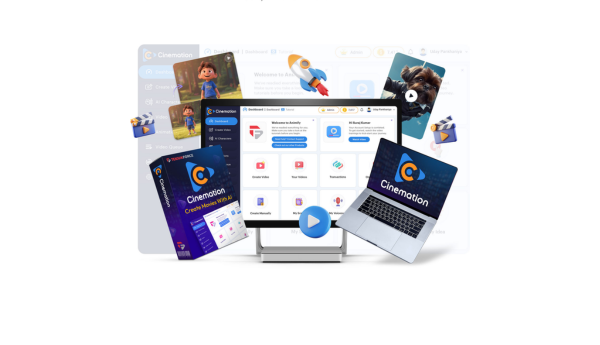
Cinemation AI is a desktop AI video application that turns scripts and story prompts into long-form, cinematic videos with consistent characters and locations across scenes and episodes, without cameras, actors, or film crews.
Cinemation AI combines script handling, character library management, location library management, shot planning, and video rendering into a unified production workflow built for multi-minute, narrative-driven output. Its defining technical capabilities are character and location consistency maintained across scenes through library-based profile management, which is the foundational infrastructure that separates it from short-form clip generators and makes serious narrative content production practically achievable.
The front-end Elite version is $47 one-time with 10,000 credits, up to three daily videos, ten characters and ten locations, self-business use license, one year of updates, and a 30-day money-back guarantee.
The Real Cost Comparison That Makes the Case
Understanding whether Cinemation AI makes financial sense requires comparing it against the realistic alternatives for producing the same content rather than against an abstract notion of what video should cost.
Traditional animation production for a ten-minute episode. Professional 2D animation production typically costs $5,000 to $50,000 per finished minute depending on quality level and studio. A ten-minute episode at modest professional quality runs $50,000 to $500,000. This is the category of production that most independent creators, educators, and small marketing teams cannot access at any reasonable point in their budget planning.
Hiring a freelance animator for a course or series. Freelance animation at accessible price points runs $500 to $5,000 per finished minute depending on style complexity and animator experience. A twenty-lesson course with ten-minute episodes costs $100,000 to $1,000,000 in animation alone at these rates. This range is equally inaccessible for most independent educators.
Using short-form AI tools for narrative content. This is technically cheaper but structurally impossible. Short-form tools that cap at sixty seconds and produce no character or location continuity cannot produce the content type that narrative educators, storytellers, and brand marketers actually need regardless of how many clips are generated.
Cinemation AI. Front-end access at $47 one-time plus the Pro upgrade at $67 for unlimited production provides the complete narrative video production infrastructure for $114 total. The comparison requires no aggressive calculation to be compelling.
Main Features of Cinemation AI

Long-Form Video Generation
Cinemation AI produces videos extending from several minutes to tens of minutes per project, which is the foundational capability that makes it relevant to narrative content production rather than social clip generation. The technical approach integrates scene and shot stitching, character and location reuse, and pacing logic across extended runtimes rather than generating clips independently and assembling them afterward.
The practical impact for specific creator types is direct and significant. An educator building a twenty-lesson course needs each lesson to function as a coherent ten to fifteen minute visual experience with consistent characters and environments rather than a series of disconnected clips that share a text description. A content creator building an episodic series needs episodes of meaningful narrative length where the story has room to develop across scenes. A brand marketer creating a product story needs runtime sufficient to communicate a complete emotional arc. Long-form capability is the foundational requirement that makes Cinemation AI serve these use cases while short-form tools cannot.
Character Consistency System
Character profiles saved to the project library apply consistently across every scene in which a character appears through stored visual and stylistic parameters rather than per-scene generation from a text description. Each profile captures appearance attributes, style, clothing, and other defined characteristics that Cinemation AI reuses each time the character is called into a scene.
The narrative and commercial implications of genuine character consistency compound significantly across long-form content. A fifteen-episode series where the lead character maintains recognizable visual identity across every scene of every episode functions as a coherent franchise with an established cast. The same content with a differently rendered lead in every scene is simply a collection of clips. Educational content where the AI guide character maintains consistent appearance across all twenty lessons builds learner familiarity that supports engagement over an entire course. The honest qualification is that character consistency performs best when rendering parameters remain stable. Extreme style changes or major rendering adjustments can introduce variations that require prompt refinement to resolve.
Location Consistency and World Building
Location libraries save environments for reuse across scenes and projects without requiring reconstruction for each new appearance. The structural distinction between a saved location and a scene that uses that location allows a single office, classroom, or spaceship bridge to serve dozens of scenes across multiple episodes while maintaining the visual consistency that establishes recurring places as part of a coherent story world.
The production efficiency that reusable locations provide compounds across long series and course content. Building a complete location library for a series once and reusing those environments across twelve episodes eliminates the production overhead that rebuilding equivalent locations for each episode would require. For educators maintaining visual world consistency across a full course, the same efficiency applies at equivalent scale.
Multi-Style Visual Output
Style categories cover two-dimensional animation for explainer and children's content, three-dimensional animation for product visualization and detailed world building, cinematic realism for promotional and commercial content, and stylized aesthetics including comic book and watercolor for distinctive brand identities. Style selection matters most at project initiation because committing to consistent parameters across the full production produces stronger visual coherence than mid-project style changes that introduce inconsistency into character and location rendering.
AI Script and Story Support
Story generation from basic premises, outline expansion to full scene structure, dialogue refinement, and scene description enhancement with environmental and mood specificity provide the AI assistance layer that makes script development accessible to non-writers and accelerates concept development for experienced creators. The pre-production compression this provides directly affects practical timelines. Traditional production invests the majority of its timeline in pre-production phases that AI assistance compresses substantially.
Desktop Application Workflow
Windows and Mac desktop application with local file management and optional cloud rendering provides stable performance for complex long projects, easier organization for productions spanning hundreds of scenes and assets, and local preview capability without continuous internet dependency. For the multi-hour sustained production sessions that serious long-form projects require, desktop application architecture is meaningfully more suitable than browser-only tools.
Beginner-Accessible Creation Infrastructure
Guided wizards, templates, presets, and built-in AI assistance for script writing, character design, and scene creation reduce the technical barrier for first-time creators without filmmaking or animation expertise. The genuine skill reduction covers technical production requirements. Basic storytelling fundamentals still determine the quality ceiling for any given creative input.
Pricing Plans and OTOs detailed
Front-End – Cinemation Elite ($47 one-time)
- One-time payment with no recurring subscriptions
- Includes 10,000 welcome credits
- Generate up to 3 videos daily
- Supports up to 10 characters and 10 locations
- Self-business use license included
- 1 year of free upgrades included
- 24/6 chat support access
- Built for personal creators and beginner users
- Includes 30-day money-back guarantee
OTO 1 – Cinemation Pro ($67 one-time)
- Includes 30,000 welcome credits
- Unlimited daily video generation
- No limits on video length
- Shot-level video editing tools
- Team collaboration access included
- Full commercial license included
- 2 years of free upgrades included
- Built for advanced creators and marketers
OTO 2 – Cinemation Reseller ($197 one-time)
- Includes 70 Pro licenses for resale
- Can be used for agency services or client sales
- Keep profits from sold licenses
- Built for agencies and reseller businesses
OTO 3 – TubeRank Jeet Pro ($67 one-time)
- AI-powered YouTube ranking toolkit
- Unlimited keyword research included
- Hashtag generation tools included
- Video optimization features supported
- Designed for YouTube growth and SEO
OTO 4 – Freezur Pro ($67 one-time)
- Includes 50,000 additional credits
- Unlimited video generation access
- All AI models unlocked
- Image-to-video generation included
- Advanced AI creation features included
- Built for high-volume creators and agencies
How to Use Cinemation AI
Script First, Production Second
Write or generate a structured script before touching any character or location creation. The script defines which characters are needed, which locations are required, and how the content splits into shots and sequences. Attempting to build characters and locations before having a script typically produces asset libraries that do not match the actual production requirements.
Build the Complete Asset Library Before Production Begins
Create all characters the script requires with detailed descriptions before starting any scene work. Build all locations the script requires before assembling scenes. The investment in building a complete, well-described library before production begins pays efficiency returns across every subsequent scene that uses those assets without requiring mid-production interruptions to create missing assets.
Commit to Style Parameters Early
Select style and rendering parameters for the project and maintain consistency throughout. Style changes mid-production introduce character and location variation that undermines the continuity the library system is designed to maintain. Early style commitment is the discipline that makes the consistency infrastructure work as intended.
Plan Shots Thoughtfully
Review AI-suggested shot angles, use shot variety to prevent static slideshow pacing, and override automatic suggestions where the intended scene feel differs from the AI's default interpretation. The difference between thoughtful shot planning and default single-angle rendering is the difference between professional cinematic pacing and amateur-feeling output from the same underlying content.
Iterate Based on Output Review
Review each rendered scene before completing the full production. Early scene outputs reveal character profile adjustments, location description refinements, and style parameter corrections that are easier to address at the scene level than after the complete production has been rendered. Iterative review and adjustment in the early stages of a project produces significantly better final output than completing the full production and attempting corrections afterward.
Pros and Cons
Pros
- Genuine long-form video capability extending to tens of minutes addresses the narrative production need that every short-form AI tool structurally cannot serve, making it the only practically accessible option for the creator categories it targets.
- Library-based character consistency provides the visual continuity that makes multi-scene, multi-episode narrative content function as coherent storytelling rather than disconnected clips.
- Location reusability across scenes and projects compounds production efficiency for series and course creators while maintaining world continuity that viewer and learner recognition requires.
- Multi-style visual output covers the range of creator categories and content types without requiring separate tools for each style requirement.
- AI script and story assistance compresses pre-production timelines significantly for non-writers and accelerates concept development for experienced creators.
- Desktop stability for complex long projects addresses the performance limitations of browser-only tools for sustained narrative production sessions.
- One-time $47 front-end pricing makes the evaluation financially accessible and compares favorably against every realistic alternative for the same production output.
Cons
- Not suitable for live events, testimonials, or ultra-high-end commercial production requiring authentic real-world footage.
- Output quality is directly proportional to input quality. Weak scripts and vague prompts produce weak outputs regardless of rendering sophistication.
- Five to ten hours of learning investment should be budgeted before professional-quality output is achievable.
- Character consistency is not perfect across every scenario, particularly with extreme style changes or major rendering setting adjustments.
- Hardware performance affects render speed significantly for complex long-form projects on lower specification machines.
- Front-end tier constraints on daily generation, character and location counts, and video length require the Pro upgrade for unlimited production capacity.
Who Is Cinemation AI For?
- Educators and course creators building narrative lesson content with consistent AI characters serving as recurring visual guides represent the most immediately practical application for Cinemation AI's continuity infrastructure, with direct cost and time advantages over every alternative production approach.
- Story-focused YouTubers and episodic content creators building animated series with recurring casts use Cinemation AI to produce professional narrative content without animation expertise, production budgets, or team coordination requirements.
- Brand marketing teams maintaining consistent brand character identities and visual worlds across product story videos and campaign content use the library system to build brand world coherence that compound across audience exposures.
- Indie storytellers and filmmakers producing short films, pilot episodes, and story adaptations use Cinemation AI to demonstrate narrative concepts at professional visual quality for a fraction of traditional production cost.
- Beginners testing content concepts for new channels, courses, or creative projects use accessible interface and AI assistance to produce first video content without prior production expertise.
Less suited for: Live event capture requiring real-time recording, testimonial content where authentic human presence is central to the value, ultra-high-end commercial production requiring real-world footage, and creators whose only content need is short social media clips.
Income and Creative Opportunities Cinemation AI Creates
Educational course production. Building and selling AI-produced video courses across Udemy, Teachable, or direct platforms represents an accessible income opportunity for subject matter experts who previously could not afford professional video production for their knowledge products.
Animated content channel building. Launching a YouTube channel built around AI-produced episodic narrative content creates an audience-building asset with significantly lower production cost and time investment than traditional animation channels require.
Video production agency services. The Pro upgrade's commercial license and the Reseller upgrade's 70 distributable Pro licenses provide the infrastructure for offering AI-produced narrative video as a client service to brands, educators, and content creators.
Brand explainer and story video services. Marketing agencies and freelancers use Cinemation AI to produce animated brand explainers and product story videos for small business clients at price points that traditional animation production cannot match.
Frequently Asked Questions
- What is the most honest overall assessment of Cinemation AI's value?
Cinemation AI genuinely delivers on its core propositions: long-form video generation with character and location continuity across scenes, accessible production workflow for non-filmmakers, and multi-style visual output from a script-driven production process. The honest qualifications are that output quality scales directly with input quality, that the learning investment before professional results are achievable is real, and that character consistency performs best when rendering parameters remain stable rather than varying significantly across a project. Creators who invest in script quality and asset library development before production and maintain consistent rendering parameters throughout consistently experience the narrative video production value Cinemation AI delivers.
- How does Cinemation AI handle a project with a large recurring cast of characters?
The character library system technically supports as many saved character profiles as the plan tier allows, with the front-end Elite tier supporting up to ten characters and the Pro upgrade removing this constraint. Projects with large casts benefit from particularly detailed character profile descriptions at the creation stage because each profile needs sufficient specificity to maintain visual distinction between characters across many simultaneous scenes. Best practices include creating profiles for every recurring character before beginning scene production, using explicitly distinct descriptors for characters who share general appearance categories, and testing each character profile in a short test scene before committing it to the full production library.
- What is the most effective approach for a course creator building their first AI video lesson?
Start with a single ten to fifteen minute lesson rather than the complete course. Create two to three characters specifically for the lesson context, write the lesson script with clear scene descriptions that specify what is being taught or demonstrated in each visual segment, build one to two locations appropriate for the lesson setting, and render the complete lesson through to the finished video stage.
Evaluate the output for character and location consistency, script-to-visual alignment, and overall production quality before applying any profile or parameter corrections. Use the corrected profiles as the production foundation for all subsequent lessons. Starting with a single complete lesson rather than attempting the full course immediately provides the quality benchmark and learning investment that makes subsequent lessons progressively faster and more consistent.
- How does Cinemation AI compare to hiring a freelance animator for the same content?
Freelance animation for quality educational or narrative content runs from $500 to $5,000 per finished minute at accessible price points, which makes a twenty-lesson course with ten-minute episodes a $100,000 to $1,000,000 production investment before any other costs. Delivery timelines for freelance animation projects typically run weeks to months per episode depending on the animator's workload and revision process.
Cinemation AI produces the same output category at the $47 to $114 platform investment plus the time required to build character and location libraries, write scripts, and run production. The trade-off is trading the animator's professional craft skill for the AI's production efficiency, with output quality in most narrative content categories being practically sufficient for the intended use case at a fraction of the cost and timeline.
- What is the realistic production output volume per month for a creator using the Pro upgrade?
The Pro upgrade removes daily generation limits and video length caps, making the practical production ceiling a function of the creator's time investment in script writing, asset library management, shot planning, and review rather than platform restrictions. A creator working full-time on Cinemation AI production could realistically produce several hours of finished narrative video content per month depending on the complexity of the project, the completeness of the asset library, and the level of iterative refinement applied to each scene before final render.
For part-time creators producing educational or series content alongside other professional activities, one to three hours of finished video per week is a realistic production rate once the asset library is established and the workflow is familiar.
- How does the shot-level video editing in the Pro upgrade improve the production capability beyond the base platform?
Shot-level editing tools in the Pro upgrade allow adjusting individual shots within a rendered scene rather than requiring the entire scene to be re-rendered to address a specific shot issue. This capability significantly reduces the iteration time for production refinement because isolated shot problems, a single angle that does not match the intended visual feel or a transition that does not work for a specific scene beat, can be corrected at the shot level without the time cost of full scene re-render. For serious narrative production at volume, this efficiency improvement is practically significant across the cumulative production of many episodes or lessons.
- What types of content benefit most from Cinemation AI's cinematic realism style?
Cinematic realism style is most appropriate for promotional content and ad concepts where visual quality expectations are higher than animation styles typically meet, for investor pitch visualizations where the professional production value of the output affects how seriously the pitch is taken, for brand story content where the emotional resonance of realistic visual presentation matters to audience response, and for product demonstrations where the product being shown needs to appear as close to its real-world appearance as possible.
The honest limitation of cinematic realism style compared to actual filmed content is that high-end commercial work requiring genuine photographic realism for advertising campaigns at major brand scale still benefits from traditional production. For the small to mid-market brand content and entrepreneurial pitch visualization that most Cinemation AI users produce, the cinematic realism style delivers practical visual quality that serves the intended purpose.
- Can Cinemation AI produce content for non-English speaking markets?
The AI script assistance and generation capabilities operate primarily in English, which affects non-English script development assistance quality. Scripts written in other languages can be used as production input, but AI-generated script content, dialogue suggestions, and scene description enhancements perform best in English. The visual output itself is language-independent because it generates visual scenes from script descriptions rather than producing text in the video itself. Voice-over, subtitling, or on-screen text for non-English markets requires external addition after the visual production stage, which is standard practice for multilingual content distribution regardless of production method.
- How should a brand marketing team approach using Cinemation AI for campaign content?
A brand marketing team's most effective approach starts with defining the brand visual world completely before any campaign content production begins. Create a brand character or mascot with a detailed profile that captures the brand's visual personality and style parameters. Build the primary brand environment locations that will appear across campaign content. Select a consistent visual style that matches the brand's existing identity. These foundational assets become the production infrastructure that every campaign piece draws from, ensuring visual coherence across all campaign content rather than requiring style and character decisions to be made fresh for each new piece.
- What is the TubeRank Jeet Pro upgrade's practical value for a creator distributing Cinemation AI content on YouTube?
Cinemation AI addresses the production challenge of creating quality long-form narrative video. TubeRank Jeet Pro addresses the distribution challenge of ensuring that produced content reaches the intended audience through YouTube search. Unlimited keyword research for identifying the specific search queries that target audience members use to find content in the creator's category, hashtag generation for optimizing video discoverability across social distribution, and video optimization features for improving YouTube search ranking together address the gap between producing good content and ensuring that good content is findable. For creators who produce quality AI narrative video through Cinemation AI and then fail to optimize for YouTube discovery, the production investment produces limited return regardless of video quality.
- What is the most common reason new Cinemation AI users are disappointed with their initial output?
Vague or overly brief script content is the most consistently reported source of disappointing initial output. Users who input a brief story summary rather than a structured scene-by-scene script with specific character actions, environmental descriptions, time of day specifications, and mood parameters receive outputs that reflect the vagueness of their input rather than a specific creative vision. Cinemation AI produces visually from what the script provides.
A script that specifies “INT. DETECTIVE OFFICE, NIGHT – Detective Sarah reviews case files under a single desk lamp, rain hitting the window behind her, concerned expression” produces a specific, directed visual scene. A script that specifies “detective thinks about the case” produces a generic interpretation. Writing clear, specific, visually descriptive scripts before beginning production is the single most impactful improvement most new users can make to their output quality.
- What is the single most effective practice for building a growing narrative content library with Cinemation AI?
Investing in a comprehensive, well-organized asset library before beginning production on any significant content series is the practice that compounds most dramatically in value as a content library grows. A complete set of detailed character profiles covering every recurring character across the series, a comprehensive location library covering every environment the content world requires, and documented style and rendering parameters that apply consistently across all projects, created as a foundational investment before the first episode or lesson is produced, pays efficiency and consistency returns across every subsequent piece of content the library supports.
Creators who build first and produce second maintain visual consistency and production efficiency across hundreds of content pieces. Creators who build assets reactively as production demands arise accumulate inconsistencies and redundancies that become progressively more difficult to resolve as the library grows.
[/tie_list] [/box]- SPECIAL BONUS 1 – MultiNetwork Poster

- SPECIAL BONUS 2 – ContentLynk

- SPECIAL BONUS 3 – AK Booster Pro

- SPECIAL BONUS 4 – FB MultiPoster

- SPECIAL BONUS 5 – GramHood

- SPECIAL BONUS 6 – Serp Scribe

- SPECIAL BONUS 7 – RankMe

- SPECIAL BONUS 8 – RankMe